In today’s fast-paced world, the pressure to "have it all together" can feel relentless. Between the demands of a high-pressure career, the logistical gymnastics of school schedules and errands, and the deeply personal commitment to being present for family, it is easy to feel stretched thin. When substance use enters this equation: often starting as a way to cope with these very stressors: the world can become a blur of anxiety, guilt, and a desperate search for a way out.
As you begin to look for support, you may find yourself navigating a sea of titles: therapist, counselor, recovery coach, and life coach. It’s a mix of excitement at the prospect of change, and a heavy dose of confusion about which path is the right one. While both counselors and coaches want to help you improve your life, the professional differences between them are profound. Understanding these distinctions is not just about semantics; it is about ensuring your safety, your health, and the long-term success of your recovery.
The Clinical Foundation: What is Substance Abuse Counseling?
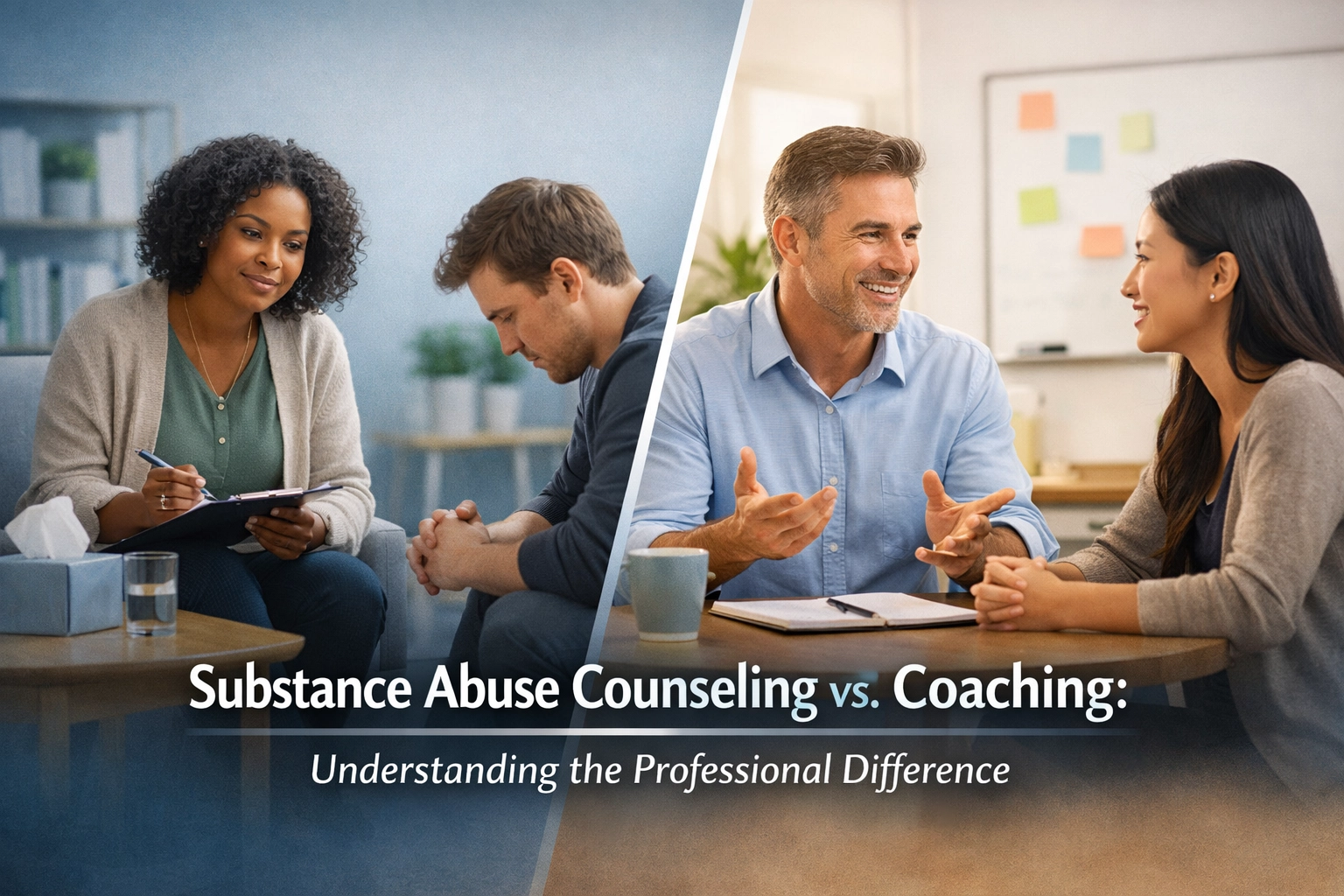
Substance abuse counseling is a clinical health care profession. It is rooted in the understanding that addiction is a complex disease that affects the brain, body, and emotional well-being. When you seek substance abuse counseling in Maple Valley, you are engaging with a professional who is licensed and regulated by the state.
Counselors are trained to look beneath the surface. They don’t just look at the frequency of use; they look at the "why." This involves clinical assessments to understand how addiction affects the brain and relationships. A licensed counselor is qualified to diagnose substance use disorders and any co-occurring mental health conditions, such as depression or PTSD, which often fuel the cycle of use.

The approach in counseling is often a blend of immediate intervention and deep-seated healing. It is directive and structured, designed to help you navigate the high-stakes period of early sobriety where the risk of relapse is highest. By using evidence-based practices like Cognitive Behavioral Therapy (CBT) or Dialectical Behavior Therapy (DBT), a counselor helps you identify the negative thought patterns and past traumas that drive your behavior.
The Goal-Oriented Horizon: What is Recovery Coaching?
Recovery coaching, or life coaching, operates on a different plane. Coaches are generally not mental health professionals and do not provide clinical treatment. Instead, coaching is often described as a partnership focused on the present and the future.
A coach acts as an accountability partner. They help clients who are already medically stable and functionally grounded to set and achieve specific life goals: whether that’s returning to school, managing finances, or improving physical fitness. In the context of recovery, a coach might help you navigate the logistics of a sober lifestyle, like finding new social groups or organizing a daily routine that supports your wellness.
However, it is vital to recognize that coaching is not a substitute for therapy. A coach cannot diagnose a mental health disorder, they cannot provide clinical interventions for trauma, and they are not equipped to manage the physiological or deep psychological complexities of a substance use disorder.

Key Differences in Training and Accountability
The distinction between these two roles often comes down to the rigors of their professional background.
- Education and Licensing: A substance abuse counselor typically holds an advanced degree and must complete thousands of hours of supervised clinical experience before becoming licensed. They are bound by a strict board of ethics and state laws. Coaches may have certifications, but the industry is largely unregulated, meaning there is no universal standard for their training or oversight.
- Scope of Practice: Counselors are trained to treat "the illness." They handle the "heavy lifting" of recovery, including what to expect in an addiction assessment and the transition between different levels of care, such as intensive outpatient treatment (IOP).
- Depth of Work: While a coach focuses on the "what" and the "how" of future goals, a counselor focuses on the "why" of past and present behaviors. Counselors work to resolve the underlying issues that make substance use feel like a necessity.
Why the Distinction Matters for Your Recovery
Choosing the wrong type of support can be more than just a setback; it can be dangerous. If someone is struggling with an active addiction or a functional but harmful pattern of drug use, they need a clinical safety net.
Addiction often involves physical dependency and significant mental health components. Attempting to "coach" your way through a clinical disorder is like trying to use a fitness trainer to set a broken bone. You might get some good advice on general health, but the underlying injury remains unaddressed and may worsen.

Professional counseling provides the framework for relapse prevention that is backed by science. It allows for a comprehensive look at your life, including how to support a loved one and how addiction impacts your family dynamic.
Navigating Transitions: When to Use Which?
The most successful recovery journeys often involve a "both/and" rather than an "either/or" approach, but the timing is critical.
- During Active Struggle or Early Recovery: This is the time for substance abuse counseling in Maple Valley. You need a professional to conduct a substance use assessment and help you determine if you need outpatient or intensive outpatient care.
- During Long-Term Maintenance: Once you have a solid clinical foundation, have addressed your underlying traumas, and have been stable in your sobriety for a significant period, a coach can be a wonderful addition. They can help you take the skills you learned in counseling and apply them to specific life ambitions.

Finding the Right Path at Thrive Behavioral Health
At Thrive Behavioral Health, we understand that the decision to seek help is often met with a mix of excitement, stress, and anxiety. You are likely trying to balance your responsibilities as a parent, an employee, and a community member while fighting a battle that feels invisible to most.
We pride ourselves on being a professional and compassionate resource for those navigating these difficult transitions. We believe in treating the whole person, which is why we emphasize that addiction and mental health treatment together is the gold standard for lasting change.
Whether you are seeking a deferred prosecution assessment or simply need to understand how to know when substance use has become a problem, our team is here to guide you with authority and empathy.
Recovery is a manageable shift, not an insurmountable mountain. By choosing the right professional support, you are giving yourself the clinical tools needed to build a stable, fulfilling life. You don’t have to guess which path is right for you. Our goal is to provide a steady, encouraging environment where you can move from the chaos of addiction into the clarity of health.
If you are ready to take that first step, or if you are still trying to figure out what to expect from your first addiction assessment, we invite you to reach out. Your journey toward healing deserves the highest standard of professional care.