
In today’s fast-paced world, many of us find ourselves caught in a relentless cycle of balancing school activities, household errands, and high-pressure professional commitments. When you add the weight of a substance use disorder or a mental health challenge to that mix, the daily juggle can feel less like a balancing act and more like a slow-motion collision. You may find yourself waking up with a mix of excitement for the day's potential, shadowed by a heavy layer of stress and anxiety about how long you can keep your personal struggles hidden from your employer.
The decision to seek help is a transformative milestone, yet it often comes with a secondary wave of fear: "What will my boss think?" "Will I lose my job?" "How do I explain my absence without losing my professional standing?" These concerns are valid, but they shouldn't be the barrier that stands between you and the care you deserve. Navigating the workplace during recovery is a manageable shift, and understanding your rights and the best ways to communicate can help you transition into treatment with your career, and your dignity, intact.
Understanding the Internal Conflict
It is entirely common to feel a deep sense of vulnerability when considering a conversation about treatment with an employer. For many, work is not just a source of income; it is a primary pillar of identity and stability. The thought of admitting that you need help can feel like admitting a failure, even though seeking treatment is actually a profound act of strength and responsibility.
Most people struggling with substance use are high-functioning individuals who have successfully managed to hide their symptoms for months or even years. When the time comes to step into intensive outpatient treatment, the transition from "the employee who has it all together" to "the employee in recovery" can feel jarring. However, viewing this as a professional medical necessity, rather than a personal shortcoming, is the first step in preparing for a successful conversation.

Knowing Your Rights: The Legal Safety Net
Before you step into your manager’s office or schedule that Zoom call, it is vital to understand that you are protected by more than just company policy. In the United States, several federal laws are designed to protect employees who need medical care, including treatment for substance use disorders.
The Americans with Disabilities Act (ADA)
The ADA recognizes addiction (in many cases) as a disability. This means that if you are qualified to perform the essential functions of your job, your employer is required to provide "reasonable accommodations" to help you do so. This can include flexible scheduling to attend outpatient services in Maple Valley or a leave of absence to attend a more intensive program.
The Family and Medical Leave Act (FMLA)
If your company is of a certain size and you have worked there long enough, FMLA may grant you up to 12 weeks of unpaid, job-protected leave per year for serious health conditions. Substance use treatment is explicitly covered under FMLA, provided the treatment is administered by a healthcare provider. This ensures that your job, or an equivalent position, will be waiting for you when you return.
Preparing for the Conversation
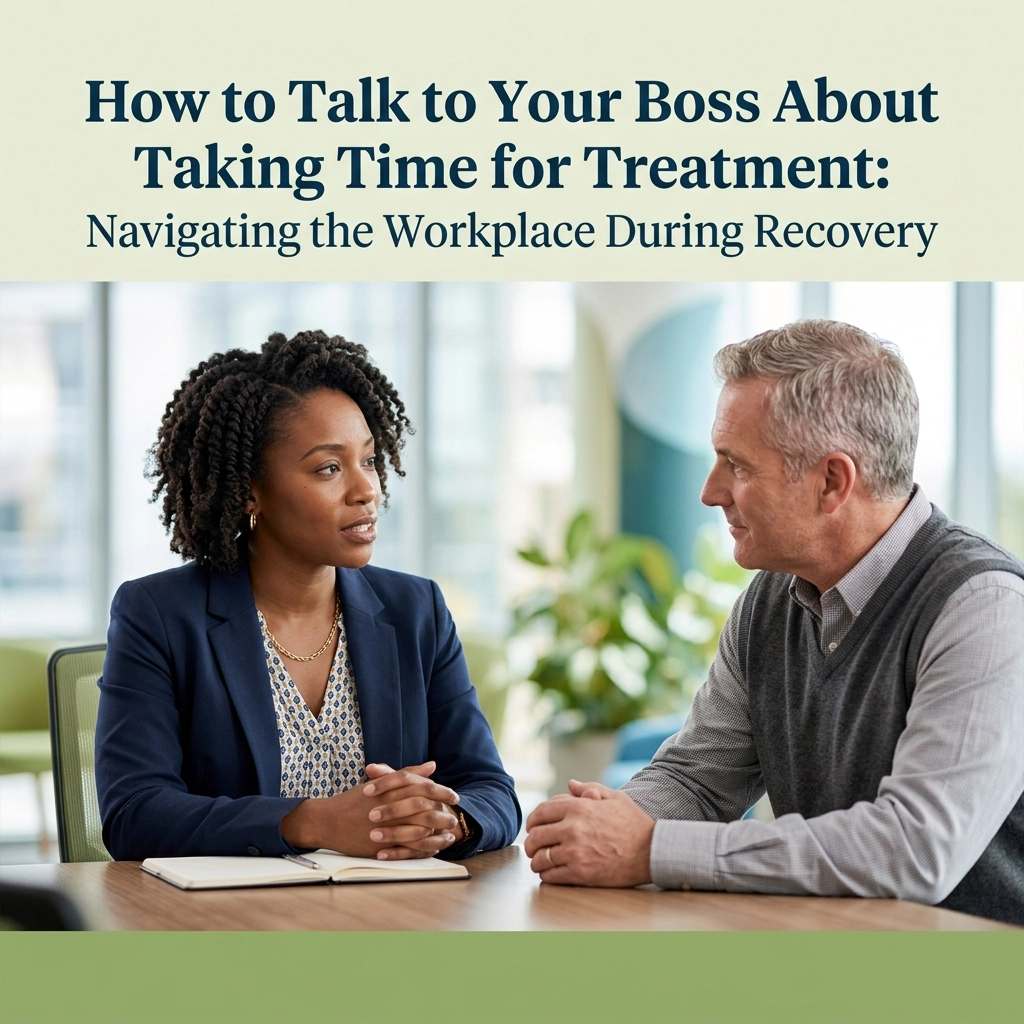
Approaching your boss requires a blend of professional clarity and personal boundaries. You do not need to share every detail of your journey to get the support you need.
1. Timing and Medium
Choose a time when your supervisor isn't rushing between meetings. Request a formal check-in rather than bringing it up in a hallway. It is also highly recommended to communicate your request in writing (via email) either before or immediately after your meeting. This creates a formal record of your request for accommodation, which is essential for your protection.
2. Focus on Function, Not Just Feelings
When you speak to your boss, you can frame the conversation around your commitment to your performance. You might say, "I have been managing a medical issue that I need to address to ensure I can continue performing at the high level this company expects. To do that, I need to begin a treatment program."
3. Be Specific About Your Needs
Vagueness can lead to administrative confusion. Are you looking for a full leave of absence, or do you need a modified schedule? At Thrive Behavioral Health, we often work with professionals who utilize our Intensive Outpatient Program (IOP). This allows individuals to receive high-level care while still maintaining some of their work responsibilities. Can you work, parent, and still get help for addiction? The answer is often yes, but it requires a clear schedule that your employer agrees to support.

The Interactive Process: Working Together
Once you have made your request, the law requires your employer to engage in an "interactive process." This is a collaborative dialogue to find a solution that works for both your health and the company’s operations.
Your employer may ask for medical documentation. You do not have to provide a detailed history of your substance use. Instead, a letter from a provider at Thrive Behavioral Health can confirm that you are under medical care, outline the required schedule for your outpatient treatment, and state that these accommodations are necessary for your health and continued employment.
Common accommodations might include:
- Starting the workday later to attend morning sessions.
- Ending the workday earlier for evening IOP groups.
- A quiet workspace to reduce stress during the initial weeks of recovery.
- Remote work options to manage energy levels and medical appointments.
Privacy and Confidentiality
One of the most frequent questions we hear at our Maple Valley addiction treatment center is: "Who will know?"
Your employer is legally obligated to keep your medical information confidential. This information should only be shared with those who absolutely need to know, such as Human Resources or the specific supervisor responsible for implementing your schedule changes. Your coworkers do not need to know the specifics. You are well within your rights to tell colleagues that you are "taking some time to address a family health matter" or "attending to some personal medical needs."

Why Taking Action Now Protects Your Career
It is a common misconception that waiting until a "better time" is the safest professional move. However, untreated substance use or mental health issues almost always eventually impact job performance. Whether it manifests as missed deadlines, increased irritability, or frequent "sick days," the effects of addiction can lead to disciplinary action before you've had the chance to ask for help.
By being proactive, you shift the narrative. You are no longer an employee with performance issues; you are an employee proactively managing a health condition. This distinction is crucial for legal protections and for maintaining your professional reputation. If you are unsure if your use has reached this point, reviewing how to know when substance use has become a problem can provide the clarity you need to take the next step.
How Thrive Behavioral Health Supports Your Professional Life
At Thrive Behavioral Health in Maple Valley, we understand that your life doesn't stop just because you need help. We specialize in providing comprehensive care that fits into the realities of a working professional's life.
Our Intensive Outpatient Programs (IOP) and traditional outpatient services are designed to offer the structure of rehab without the total disconnection of an inpatient stay. This means you can stay connected to your family, your home, and: when appropriate: your job. We provide the documentation and professional support needed to help you navigate the "interactive process" with your employer, ensuring that your transition into recovery is as smooth as possible.

Moving Forward with Confidence
Stepping forward to ask for help is rarely easy. It requires moving through a complex set of emotions: a mix of fear, relief, and uncertainty. But remember, the goal of treatment isn't just to stop a behavior; it's to restore your quality of life, including your professional success.
If you are feeling overwhelmed by the logistics of balancing work and recovery, you don't have to figure it out alone. From your initial addiction assessment to the day you complete your program, we are here to act as your mental health guide.
Navigating the workplace during recovery is a journey of reclaiming your power. By understanding your rights, preparing your message, and choosing a treatment partner that respects your professional obligations, you can begin the transformative work of healing.
If you're ready to explore how outpatient treatment can fit into your life, reach out to our team at Thrive Behavioral Health today. Your career is important, but your health is the foundation upon which everything else is built. Let's start building a stronger foundation together.